
We help industrial and manufacturing companies unlock profitable growth — through clear, actionable strategy and disciplined execution.








Strategy & Execution Disciplines

Strategy
Where to Compete, How to Win — and how to build Strategic Leverage
- Mapping and segmenting markets
- Prioritizing segments, balancing relative capabilities and segment attractiveness
- Developing winning value propositions
- Designing next-generation business models enabled by new technologies and capabilities
- Competitive positioning and Go To Market
- Growth strategies
- Ecosystem dynamics and how to exploit them

Manufacturing Strategy
What you Make (vs Buy), Where You Make it, How you Make it — and Why
Manufacturing strategy is business strategy for firms with manufacturing operations. Yet until recently, achieving the lowest landed cost has dominated manufacturing choices.
But in today's volatile environment, your production configuration must balance cost, flexibility, delivery, quality, and resilience to cost and trading shocks. Disruptions arise from wars, piracy, pandemics, exchange rate shifts, spikes in shipping costs, on-again-off-again tariffs, and more.
We help you design resilient production configurations aligned to your business strategy.

Operating Governance
How the organization makes, tracks, and enforces key decisions — especially those with strategic implications.
We build decision-making processes and mechanisms for making key choices and achieving strategic alignment across complex organizations — who decides what, and how
- Product development portfolios
- Joint venture governance
- Product planning, product portfolio management
- Resource allocation
- Engagement models
- Collaboration across regions & functions

Organizational Architecture
The fundamental design and shape of an enterprise and its constituent units to best execute the business strategy

We design the structures — organizational configurations, roles, operating models — that deliver the capabilities required to bring the business strategy to life.
The right architecture reduces complexity, accelerates processes and accelerates transformation.
If this way of thinking resonates, let's talk
Initial conversations are focused, confidential, and exploratory. Contact Us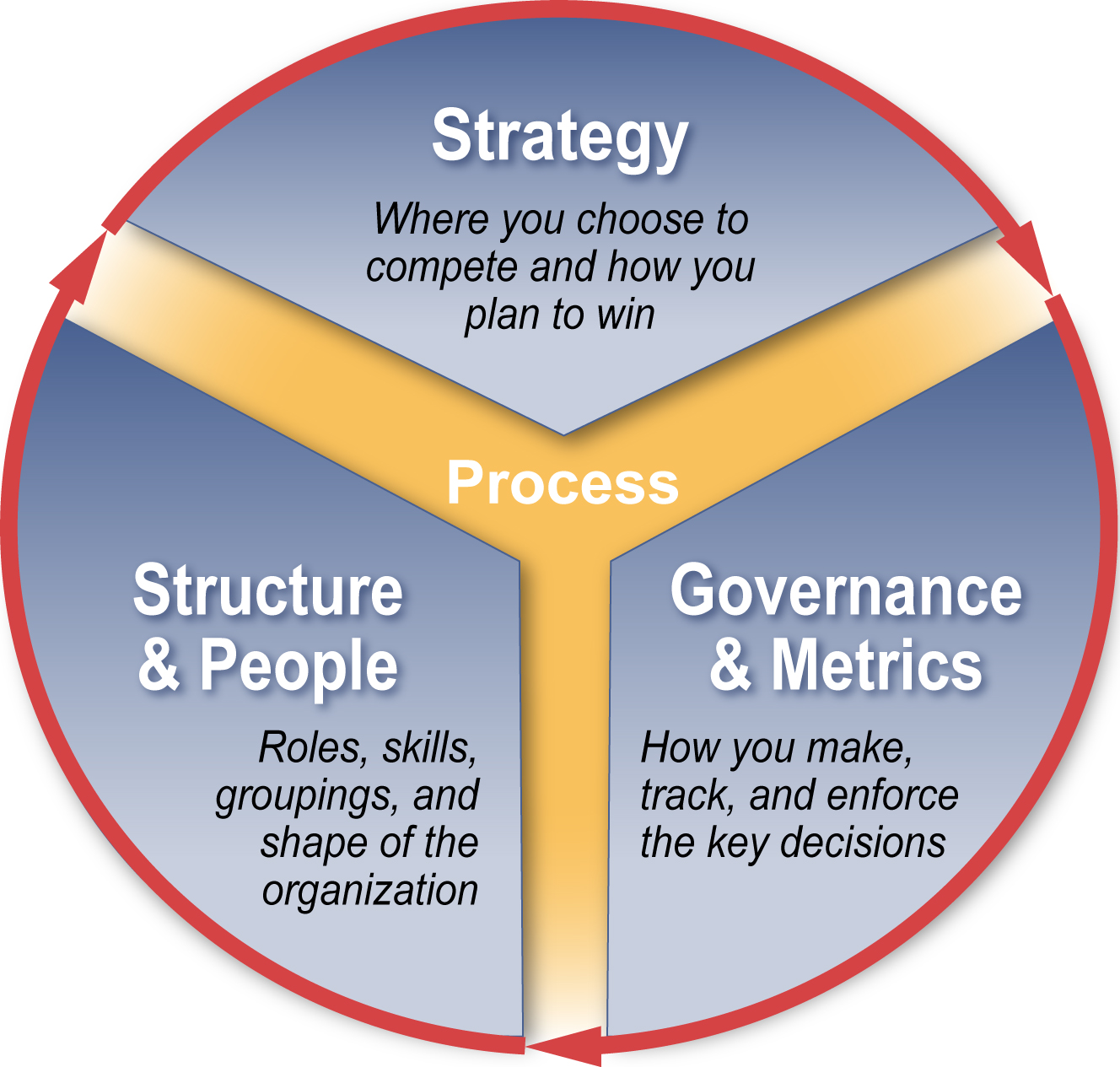
A good strategy will struggle without appropriate governance; governance without good strategy is just ritual; and neither is effective without the right people in a suitable structure.
Strategy, Organizational Architecture and Governance need to be aligned for the organization to succeed. A good strategy that is poorly executed due to ineffective operating governance or an unsuitable organizational structure is likely to fail (or at least underperform). A reorganization that doesn’t take into account dynamic strategy is less likely to meet its objectives; and operating governance, to ensure the right people are making the right decisions, must take into account the organizational architecture and the strategy.
Any of these elements may need to change due to new competitors, changed regulations, different input costs, new technologies, or any of the other myriad ways the business environment is continuously evolving. That doesn’t mean they all must change or that they must change together — successful companies carefully evolve as the environment changes, and we can enter in any of these practice areas to begin to make improvements. We employ distinctive techniques (such as business wargaming and organizational simulations) across all our practice areas, as well as proprietary frameworks and processes.